Real Cost of Rubbish Removal in Walthamstow Explained
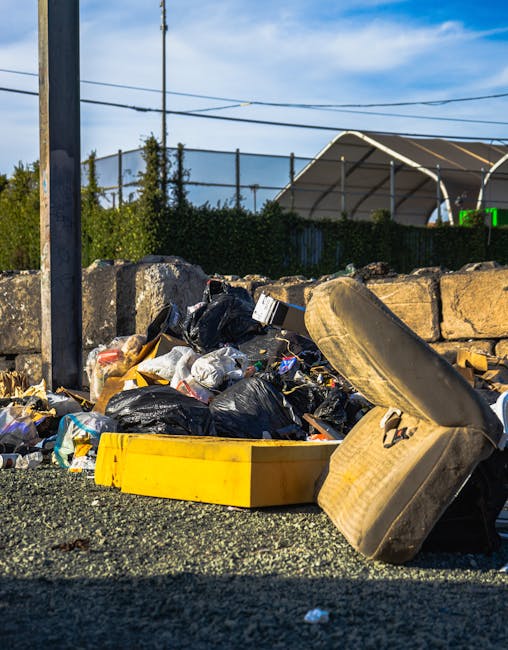
If you are trying to work out the real cost of rubbish removal in Walthamstow, you are not alone. Most people start with a simple question: how much will this actually cost me? Then the picture gets messy fast. There is the amount of waste, the type of waste, access, labour, parking, timing, and whether you need same-day help. In other words, it is never just "a van and a bloke".
This guide explains the pricing logic in plain English, so you can compare rubbish removal quotes with confidence, avoid hidden extras, and decide whether a full clearance service, a small waste collection, or an alternative like a skip makes more sense. We will also look at local considerations, what tends to drive cost up, and where good planning saves money. To be fair, a bit of clarity goes a long way here.
Why the Real Cost of Rubbish Removal in Walthamstow Explained Matters
Rubbish removal looks straightforward until the quote lands in your inbox and you realise the job is priced on more than volume alone. That is where many people feel caught out. A quote that seems cheap at first can become expensive once labour, heavy lifting, awkward access, or specialist disposal are added on. The point of understanding the real cost is not just saving money. It is about choosing the right service for the waste you actually have.
In Walthamstow, homes and businesses often deal with the same practical issues seen across inner and east London: narrow stairwells, controlled parking, shared entrances, back gardens with limited access, and bulky items that are heavier than they look. A mattress in a hallway, a broken wardrobe on the third floor, or a builder's bag full of rubble can change the price quickly. That is normal. What is not normal is discovering those costs after the job has started.
It also matters because rubbish removal affects more than your wallet. A poor decision can waste your time, create mess, or leave you with a provider that is not handling waste properly. For households and businesses alike, the right clearance choice can mean a faster turnaround, better recycling outcomes, and far less stress. And honestly, less stress is often the real product here.
If you are comparing services, it is worth looking beyond the headline price. A sensible starting point is the provider's pricing and quotes approach, because transparent pricing usually tells you a lot about how the rest of the service works.
How the Real Cost of Rubbish Removal in Walthamstow Explained Works
Most rubbish removal services price jobs using a mix of volume, weight, labour, and disposal complexity. That sounds technical, but the logic is simple. More stuff usually means more loading time and more disposal cost. Heavier waste can cost more because it is harder to move and often costlier to process. Some items need separate handling. Others can be lifted quickly. The job is judged on the whole picture, not just the pile on the floor.
Here is the usual flow. First, the provider needs to understand what you have. Photos help. A list helps. Even a rough description helps. Then they assess whether the waste is mostly light household clutter, a few bulky items, mixed waste, building debris, garden waste, or something more specialised. After that, they factor in access. Can a van stop nearby? Is there parking? How many floors are involved? Is there a lift? Will the team need to carry everything down tight stairs? Those details are not small. They are the difference between a quick collection and an awkward one.
Special items also shift the final price. Appliances, mattresses, sofas, fridges, office electronics, and certain mixed materials may require different disposal routes. If you are dealing with anything that could be classed as hazardous, the process becomes more careful, and the cost reflects that extra responsibility. You should never want the cheapest possible option for a job that needs proper handling. That is one of those cases where cheap can be a false economy, quite a big one.
For many customers, the best fit is a service that covers a broad range of waste and can adapt to the job on the day. If that is what you need, the main waste removal service page is a useful place to understand the scope of what can usually be collected.
As a practical example, two jobs that look similar in size can price very differently. A neat pile of bagged household clutter in a driveway is usually easier and cheaper than the same amount of loose waste spread across a flat with no lift and a long walk to the van. Same volume. Very different effort.
Key Benefits and Practical Advantages
Once you understand how pricing is built, rubbish removal becomes easier to use well. The first benefit is speed. If you need space cleared before a tenancy handover, renovation start date, or family move, removal services can often be booked quickly and completed in one visit. That can be worth more than the service fee itself because it keeps everything moving.
The second benefit is convenience. You do not need to hire a vehicle, lift heavy items yourself, or spend a Saturday dragging broken furniture down the stairs. Let's face it, most people would rather not do that. A proper clearance team handles the labour, loading, and disposal in one go. For many homes, that is the main reason to use the service at all.
There is also a cleanliness benefit that people underestimate. A lot of clutter is not just visually annoying; it gets in the way of normal life. Dust collects, rooms feel smaller, and jobs get postponed because the space is unusable. Clearing the waste often changes the whole feel of a property, especially in smaller Walthamstow flats where every square metre matters.
Another practical advantage is sorting. A reputable provider should know how to separate reusable, recyclable, and residual waste where possible. That means less material ending up in landfill than if everything were simply dumped together. If sustainability matters to you, it is sensible to look at the company's recycling and sustainability approach before booking.
Finally, you get predictability. Once the service scope is clear, you can budget properly. No one likes surprise charges. Not on a waste job, not anywhere really.
Who This Is For and When It Makes Sense
Rubbish removal is useful for a surprisingly wide range of people. Homeowners use it after decluttering, redecorating, or clearing out a spare room that somehow became a storage unit for things nobody can explain. Tenants use it when moving out and trying to avoid disputes over leftover junk. Landlords use it between lets when a property needs to be reset quickly.
It also makes sense for people clearing inherited property, garages, lofts, sheds, and storage spaces. Those jobs are often more emotionally draining than expected. A loft full of old boxes is not just loft clearance; it can be a lot of decision-making, dust, and "we might need this one day" thinking. If that sounds familiar, you may find a specialist loft clearance service more helpful than a one-off van collection.
Businesses need rubbish removal too. Offices regularly need old chairs, filing cabinets, broken monitors, packaging, and general clutter removed without disrupting work. Shops, studios, and small commercial premises often need a flexible collection time and discreet handling. If your workplace is dealing with a backlog, a dedicated office clearance can save a lot of internal time.
Builders and renovators are another clear group. Construction waste is bulky, heavy, and often awkward to sort. A mixed load from refurbishment work usually needs a different approach from ordinary household rubbish. That is where builders waste clearance becomes relevant.
Sometimes it is simply a one-item job. A broken sofa, a fridge that has stopped working, or a mattress that has outlived its welcome can be enough to justify a collection. Small jobs can still be cost-effective if they save you time and a lot of effort. Especially if you live upstairs. Especially if it is raining. You know the feeling.
Step-by-Step Guidance
- Work out what you actually need removed. Separate general rubbish from bulky items, electricals, garden waste, and anything potentially hazardous. A quick sort at the beginning often saves money later.
- Take clear photos. A wide shot plus a couple of close-ups is usually enough. Include stairways, access points, and anything awkward like basements or narrow entrances.
- Ask for a clear quote structure. Find out whether the quote covers labour, loading, disposal, congestion-related time, and VAT if relevant. The more specific the quote, the fewer surprises.
- Check access and timing. If the road is busy or parking is difficult, mention it early. A ten-minute access issue can turn into a much longer job on the day.
- Decide whether removal or self-hire is better. For some loads, a skip may make sense. For others, a man-and-van style collection is faster and simpler. If you are weighing that up, the page on what can go in a skip is useful for thinking through the sort of waste you have.
- Book a suitable time slot. Morning slots can be handy if you want the rest of the day back. End-of-day jobs sometimes suit businesses better. Choose the timing that matches how the property is used.
- Prepare the items. If possible, group waste together and make sure the team can reach it safely. But do not overdo the lifting yourself. There is no medal for wrestling a wardrobe down the stairs.
- Check the final scope before work starts. If the team sees something unexpected, ask how it affects the price before giving the go-ahead. Good communication prevents awkwardness.
That sequence sounds basic, but it is exactly what helps keep costs under control. A tidy, well-described job is almost always easier to price fairly.
Expert Tips for Better Results
One of the easiest ways to reduce cost is to separate waste before collection. Mixed waste often costs more because it is harder to process. For example, a load of mostly cardboard, bags, and light household items is usually simpler than a single pile containing furniture, soil, plasterboard, and broken appliances. Sorting at source does not need to be perfect. Just good enough to make the job cleaner.
Another tip: be realistic about access. People often underestimate how much time stairs, distance from van to property, and awkward corners add to a job. If the team has to carry items through a long hallway, up a split staircase, or around the back of a building, mention that upfront. It is much better to give a little more information than to leave the provider guessing.
Timing matters too. If you need same-day or urgent clearance, expect the price to reflect that speed. There is nothing wrong with paying for urgency. Just know what you are paying for. A planned collection is often cheaper than a panic booking at 4pm because the flat has to be empty by morning.
Where possible, ask whether reusable items can be separated first. Some providers are willing to work around furniture that can be reused or donated elsewhere, although that depends on condition and practical logistics. A damaged chair is not a treasure. A solid bookcase might be another story.
One more thing: if you need ongoing waste support rather than a one-off clearout, a recurring arrangement can be better value. Businesses in particular may find a regular business waste removal setup easier to manage than calling for ad hoc collections every time the bins overflow.
Common Mistakes to Avoid
The biggest mistake is chasing the cheapest quote without checking what it includes. A low headline price is useful only if it reflects the real job. If it does not include lifting from upstairs, bulky item handling, or disposal fees, the final bill may be much less friendly than expected.
Another common error is failing to mention special items. A fridge, sofa, mattress, or damaged appliance can alter the collection method and cost. For example, if you need a dedicated fridge and appliance removal service, say so from the start. Same story for mattress and sofa disposal. These are normal items to remove, but they are not always priced exactly like general rubbish.
People also forget about hazardous materials. Paint, chemicals, batteries, certain cleaning products, and similar waste may need specialist handling. If you are unsure, ask before you book. It is better to check than to find yourself halfway through a collection that cannot legally proceed as planned.
A subtle mistake is not checking building access. In flats, communal hallways, controlled entry systems, and parking restrictions can all affect the job. Even a small delay can create unnecessary cost. Not dramatic, but enough to matter.
And then there is the classic one: assuming all waste is the same. It is not. Garden waste, household junk, builders' rubble, office equipment, and confidential paper each come with different handling needs. That is why services like garden clearance and confidential shredding exist as distinct options.
Tools, Resources and Recommendations
You do not need complicated tools to plan a rubbish removal job well. A phone camera is enough for most quotes. A notebook, basic measurements, and a rough list of what needs removing will also help. If you are dealing with a property clearout, walk room by room and write down what stays and what goes. It sounds a bit old-fashioned, but it works.
For larger jobs, make a simple waste map. That just means identifying which waste is in each room, where it is located, and whether it is easy to carry out. This is particularly useful for lofts, garages, and full-house clearances. A well-structured house clearance or garage clearance can be planned much more accurately when the provider knows the layout beforehand.
If you are clearing a flat, tight access and shared spaces become even more important. A specialist flat clearance page is useful for understanding how a removal team may approach smaller, more awkward properties. The same applies to home clearance when you want a broader, whole-property service rather than a single-item pickup.
Another practical recommendation is to review company policies that speak to trust and process. Pages such as insurance and safety, health and safety policy, and payment and security can give you a decent feel for professionalism before you commit. You do not need to read them like a legal textbook. Just look for clarity, plain language, and sensible procedures.
Law, Compliance, Standards, or Best Practice
Waste removal in the UK is not just a convenience service; it sits within a framework of responsible handling and disposal. That means the provider should understand how to move waste safely, segregate where necessary, and dispose of it through proper channels. You do not need to know every detail as a customer, but you should expect responsible behaviour and straightforward answers.
For householders, the main point is simple: use a service that handles waste lawfully and with care. For businesses, the bar is a little higher because commercial waste carries extra record-keeping and duty-of-care expectations. Best practice includes accurate descriptions of the waste, honest pricing, safe lifting, and correct disposal routes. Nothing fancy, just solid standards.
If a provider talks clearly about recycling, sorting, and handling of sensitive waste, that is a good sign. If they cannot explain what happens to the waste after collection, that is less reassuring. The same goes for safety. A reliable company should be able to explain how it manages lifting, access, and item-specific risks without sounding vague.
Compliance also matters when hazardous or specialist materials are involved. In plain terms, if something could contaminate other waste or pose a risk in transport, it should be treated separately. That is why items like appliances, certain electronics, or potentially hazardous loads need more care. No shortcuts there. Not worth it.
When in doubt, ask direct questions. What is included? What happens if you find extra waste on the day? How are special items handled? A professional team should answer without making you feel awkward for asking. In fact, those questions are a sign you are doing it properly.
Options, Methods, or Comparison Table
There are a few common ways to deal with rubbish in Walthamstow, and the right one depends on the size, type, and urgency of the job. Here is a straightforward comparison.
| Option | Best for | Typical strengths | Watch-outs |
|---|---|---|---|
| One-off rubbish removal | Bulky items, mixed household waste, quick clearouts | Fast, labour included, minimal disruption | Price can rise if access is poor or waste is specialised |
| Skip hire | Projects with ongoing waste over several days | Useful for DIY and gradual filling | Space needed outside, permit or access considerations, you do the loading |
| Specialist clearance | Flats, estates, inherited homes, office or furniture-heavy jobs | Tailored handling, efficient for larger or awkward jobs | May cost more if the waste is mixed or hard to access |
For many people, the choice comes down to effort versus control. A skip gives you time, but you load it yourself. A removal team takes the physical work away, which is often the bigger win. If your waste is mainly bulky furniture, a focused furniture clearance or furniture disposal service can be a cleaner fit than a general solution.
Builders may still prefer a combination approach depending on the site. For example, a small renovation may work well with periodic collections, while a long project may suit a container-based method. There is no one perfect answer. There is only the best answer for your exact mess, which is rarely glamorous, but there we are.
Case Study or Real-World Example
Imagine a Walthamstow flat where a couple is moving out after three years. They have a broken sofa, an old mattress, a few bags of clothes, some kitchen clutter, and a couple of shelves in pieces. On paper it sounds like a small job. In practice, it is a third-floor walk-up with a narrow stairwell and no lift. That changes things immediately.
If they ask for a quote by saying "just a bit of rubbish", they may get a rough price that later needs adjusting. If instead they send clear photos and explain the access, the quote can be much more accurate from the start. The team can plan for the lifting time, estimate vehicle space properly, and know whether special items need extra handling. The final price is not necessarily higher because the quote was honest; it is often simply more realistic.
Now compare that with a garage cleanout in a house near the edge of the area. The waste is mostly cardboard, some old toys, a dismantled table, and several bags of general clutter. The garage opens directly onto the driveway. That job is usually quicker, easier, and cheaper to complete. Same service category, very different effort.
The lesson is clear. The real cost is shaped by the job's complexity, not just the amount of stuff. And if you are wondering why one quote seems higher than another, access and item type are often the answer hiding in plain sight.
Practical Checklist
- List every major item and group the waste by type.
- Take photos from a distance and up close.
- Note stairs, lifts, gates, parking, and distance to the van.
- Check whether you have bulky, heavy, or specialist items.
- Ask what the quote includes and what could change the price.
- Confirm whether recycling or reuse is part of the service approach.
- Make sure hazardous items are declared before booking.
- Choose a time slot that suits access and building rules.
- Keep pathways as clear as you reasonably can.
- Review policies on safety, payment, and disposal before you commit.
If you tick those boxes, you are already ahead of most people. Seriously, that little bit of prep makes a real difference.
Conclusion
The real cost of rubbish removal in Walthamstow is not a mystery, but it does reward careful planning. The final price usually reflects volume, weight, labour, access, item type, urgency, and disposal complexity. Once you know that, quotes become much easier to compare and much harder to misread.
For most people, the best outcome is not the cheapest headline number. It is the cleanest, clearest, most predictable service for the job in front of you. That might be a quick sofa pickup, a full flat clearance, a garage emptying, or a bigger commercial job. The right choice depends on what is actually there, not what you hope is there. Small difference, but it matters.
If you are ready to move from guesswork to a proper plan, check the service details, compare the scope carefully, and book with confidence. A tidy space has a way of lifting your mood too. Funny how that works.
Get a free quote today and see how much you can save.
Frequently Asked Questions
How is rubbish removal usually priced in Walthamstow?
It is usually priced using a combination of waste volume, weight, labour, access, and disposal type. If the job involves stairs, bulky items, or special handling, the cost can rise accordingly.
Why do two similar rubbish removal jobs cost different amounts?
Because the visible pile is only part of the job. A heap on a driveway is not the same as the same amount of waste on a top floor with tight access. Time and effort matter a lot.
Is rubbish removal cheaper than hiring a skip?
Not always. If you want to load waste over several days, a skip may be better. If you want the waste taken away quickly with no lifting on your part, rubbish removal can offer better overall value.
What items cost more to remove?
Bulky furniture, mattresses, fridges, appliances, mixed heavy waste, and specialist items often cost more because they require extra handling or different disposal routes.
Can I reduce the cost by sorting the waste myself?
Yes, often you can. Separate waste by type where possible and keep special items identified. A clearer load is usually easier and cheaper to assess.
Do I need to be home during the collection?
Usually yes, unless the provider has agreed a different arrangement in advance. It is helpful to be present if there are access questions or anything unusual about the load.
What should I send for an accurate quote?
Photos, a rough item list, and notes about access are usually enough. If the waste is in a loft, basement, or upper-floor flat, mention that clearly.
How do I know if something counts as hazardous waste?
If it is chemical, flammable, potentially polluting, or otherwise risky to transport with general rubbish, treat it as a specialist item and ask before booking. When in doubt, do not guess.
Are office clearances priced differently from home clearances?
Often yes, because office waste can include electronics, confidential materials, and larger furniture items. The handling requirements can be different even if the volume looks similar.
What happens to the rubbish after collection?
In a professional service, it should be sorted, transferred, and disposed of through appropriate waste channels, with recyclable material separated where possible. Good providers are clear about this.
Is same-day rubbish removal worth paying for?
If you have a deadline, a property handover, or urgent access issues, it can be worth it. If the job is flexible, booking ahead is often better value.
What is the biggest mistake people make when comparing quotes?
They compare the headline number without checking what it includes. Labour, loading, special items, and access can change the true price quite a bit, so the fine print matters.